
Red light therapy for hair regrowth in Singapore

LLLT for male and female pattern hair loss

Red light therapy for hair regrowth, also known as low-level laser therapy or LLLT, is a non-invasive treatment option for men and women with pattern hair loss.

Certain LLLT devices are FDA-cleared for indicated male and female pattern hair loss. When used as part of a professionally guided treatment plan, LLLT may help support follicle activity and promote thicker, stronger-looking hair over time, without surgery or downtime.

If you are noticing thinning at the crown, a widening part, reduced density or increased shedding, red light therapy may be considered when hair follicles are still active.

At Vesure, LLLT is only introduced after scalp assessment, so the recommendation can be matched to your condition, stage of hair loss and scalp needs.

Assessment-led red light therapy, not one-size-fits-all treatment

FDA-cleared LLLT device

Assessment-led recommendations

Professional medical-grade LLLT

Best suited to early-stage thinning

What is LLLT for hair regrowth?

Low-level laser therapy, or LLLT, is a non-surgical, non-invasive treatment that uses carefully controlled red light to support hair follicles in people with thinning hair. In clinical settings, this form of phototherapy is used to help maintain follicle activity, support the scalp environment and encourage healthier hair growth over time.

LLLT is generally more suitable when hair follicles are still present but underperforming. It is usually less suitable for long-standing smooth bald areas where follicles may no longer be viable.

How LLLT supports hair growth

LLLT is used to support hair growth by delivering controlled low-level laser light at clinically relevant wavelengths and energy levels to the scalp and follicle environment.

The absorbed light energy is thought to influence cellular processes through photobiomodulation, including pathways associated with follicle activity and the hair-growth cycle. The aim is to support existing follicles and promote healthier hair growth over time.

  • Supports follicle activity by helping weakened follicles remain more active

  • Supports local microcirculation and improves the scalp environment and supports local microcirculation

  • Reduces inflammation and stress on the follicle that contribute to shedding and follicle decline

  • Strengthens the hair shaft that Encourages thicker, stronger-looking hair over time

Is low‑level laser therapy (LLLT) right for you?

This page explains who benefits from LLLT, how our medical-grade system works, what happens in the S$85 diagnostic trial, and realistic timelines for review and maintenance.

Assessment and suitability

Clinical scalp imaging, hands‑on evaluation and clear suitability guidance to determine whether LLLT is appropriate for you.

Device and safety

Professional laser system details: how clinical LLLT differs from consumer red‑light devices, plus safety notes and certificate availability on request.

The trial explained

What the S$85 2‑in‑1 diagnostic session includes, why it’s useful and how it informs personalised recommendations.

Typical timeline and outcomes

Early scalp improvements to expect, a meaningful review at four to six months, and ongoing maintenance considerations.

At Vesure, we do not position LLLT as a one-off miracle treatment, but as part of a personalised, phased approach that starts with proper scalp understanding.

Advantages of LLLT hair loss treatment

Low-level laser therapy offers a practical, non-surgical option for people seeking support for early hair thinning. In suitable cases, it can be a useful part of a broader hair restoration plan, particularly for those who want a clinically guided treatment that is conservative, well tolerated and manageable over time.

Non‑surgical and generally well tolerated

LLLT does not involve incisions, significant discomfort or recovery time for most clients, making it a comfortable option for people who prefer a less invasive approach.

Practical to include in routine care

Sessions are usually straightforward and easy to schedule, which can help support consistency over time and make treatment easier to maintain alongside daily life.

Supportive rather than standalone

LLLT is commonly introduced as part of a wider hair or scalp programme rather than used in isolation, which allows treatment planning to be tailored more effectively to the individual.

Lower procedural risk

When delivered clinically with proper assessment, LLLT has a low risk profile compared with surgical options or systemic medications, appealing to those seeking a more conservative route.

Who may benefit from LLLT?

LLLT is most appropriate for people with early to moderate pattern hair loss when hair follicles remain active. It is also commonly considered by those who have recently had a hair transplant and want supportive care to help preserve and enhance results. 

A diagnostic scalp assessment is essential before recommending LLLT so the treatment can be tailored to your stage of hair loss and scalp condition.

It may be suitable for

Men and women with early to moderate pattern hair loss
Thinning at the crown or vertex of the scalp
A widening part or noticeable reduction in overall density
Visible miniaturisation, where individual hairs are becoming finer over time
People seeking a non-surgical, low‑risk option
People looking for supportive care within a broader scalp or hair programme
Clients seeking supportive care after a hair transplant

Laser vs LED: why the difference affects treatment effectiveness

Not all red light devices work in the same way. For hair regrowth, effectiveness depends not just on the colour of the light, but also on the type of light source, wavelength, energy delivery and treatment design.

Laser systems

Focused, controlled energy delivery

Laser-based LLLT produces coherent, focused light, allowing energy to be delivered in a more concentrated and controlled way to the scalp.
Because laser light is more focused, it is generally better able to deliver a therapeutic dose to the level of the hair follicles.
Laser systems are often designed to provide more uniform and controlled scalp coverage, which supports treatment consistency across the treatment area.

Many consumer LED devices

Visible red light does not always mean clinical delivery

LED devices produce non-coherent, scattered light, which tends to disperse more easily.
That wider spread reduces the amount of effective energy reaching the target area at follicle level.
Some well-engineered LED systems may still offer benefit, but lower-powered consumer devices do not deliver the same level of follicle stimulation as professional clinical systems.

Why this matters for hair regrowth

Hair regrowth depends on more than red light alone: The device must deliver the right wavelength and sufficient energy in a clinically appropriate way. A visible red glow by itself does not mean the treatment is suitable for hair regrowth.
Clinical outcome depends on dose and protocol: Published studies supporting LLLT for hair loss are based on specific treatment parameters, not generic red-light devices.
Professional treatment planning matters: Medical-grade systems are usually paired with structured treatment schedules and proper suitability review, which are both important in real-world outcomes.

A simple visual check anyone can use

Enclosed panels vs open bulbs:
A treatment head with enclosed panels that covers the scalp is more often associated with a clinical laser system. Open or semi-open arrays with many visible bulbs are more often associated with LED-based devices.

This visual check is only indicative to help you gauge whether a device is more likely to be a clinical-grade system or a consumer LED unit.

Our approach at Vesure: Red light therapy hair regrowth at Vesure refers to clinically delivered LLLT using a professional medical-grade system, not ordinary beauty lights or generic consumer devices.

It is introduced as part of an assessment-led treatment plan so that suitability and realistic expectations are properly considered before treatment begins.
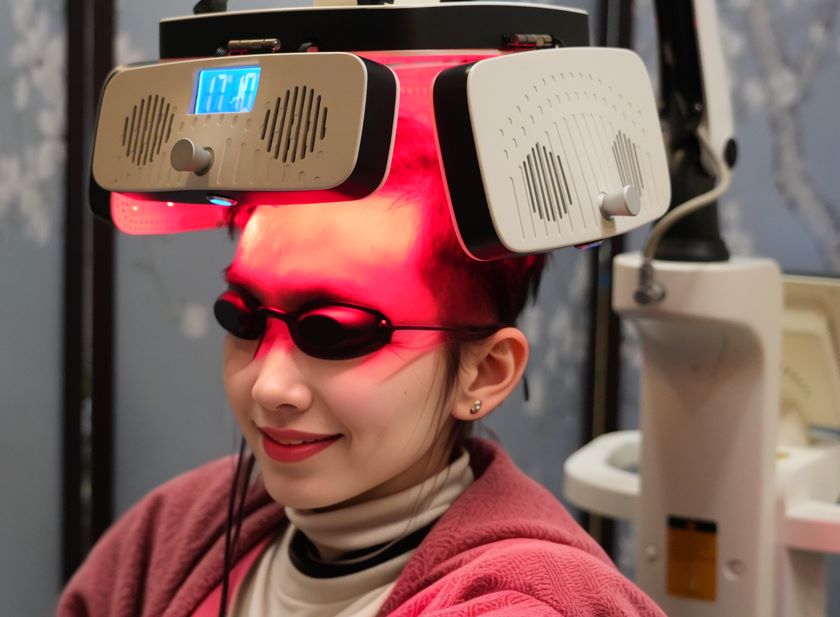
FDA-cleared LLLT Hair Growth

Vesure’s professional LLLT system

At Vesure, red light therapy for hair regrowth refers to clinically delivered low-level laser therapy using a professional, high-density laser system designed for structured scalp coverage, treatment comfort and repeatable clinical delivery.

Designed for clinical consistency, comfort and coverage

Our professional LLLT system uses a high-density array of more than 400 Class 3R medical laser diodes operating at 650 nm. The multi-panel dot matrix design is intended to support more even energy delivery across the treatment area, while the cantilever structure helps make each session comfortable and repeatable.

400+ medical-grade laser diodes

650 nm wavelength

Comfort-focused cantilever support

Multi-panel scalp coverage

Vesure’s device system

400+

Class 3R medical laser diodes arranged for high-density treatment coverage.

650 nm

Commonly used red-light wavelength in professional laser hair regrowth systems.

Multi-panel

Dot matrix arrangement designed to support more uniform irradiation across the scalp.

General flow of an LLLT treatment session

A typical LLLT appointment is structured for consistency, comfort and scalp preparation.

Treatment begins with scalp exfoliation and cleansing to refresh the scalp and prepare it for the session.
LLLT is then delivered in a calm, non-invasive treatment setting designed for comfort and consistency.
The final scalp application may vary depending on your treatment plan and scalp condition.

Your plan is adjusted to your condition, with frequency and follow-up guided by scalp findings and response over time.

Interested in whether this system is suitable for your scalp condition?

This practical 120-minute introductory session combines scalp detoxing to cleanse and refresh the scalp with relaxing head reflexology to support scalp comfort and overall wellbeing.

Start with a diagnostic scalp assessment and introductory treatment experience before deciding on a longer-term programme.

How LLLT fits into your Vesure care plan

As with other hair and scalp treatments at Vesure, LLLT follows an adaptive care approach that evolves as your scalp responds. Hair and scalp improve in phases, and we structure treatment around that natural process.

If you are experiencing hair loss or thinning but are unsure which treatment is right for you, explore our hair loss treatment in Singapore approach to understand how scalp assessment guides treatment selection.

Stabilise and restore scalp health

Reduce scalp imbalance, buildup and irritation
Improve scalp condition and comfort
Support control of excessive shedding

Strengthen and support growth

Review progress against baseline observations and images
Introduce targeted hair growth therapies where suitable
Support healthier follicle function and stronger hair

Maintain and preserve

Preserve improvements with a practical home programme
Schedule in-centre reviews and ongoing monitoring
Build healthy scalp habits for long-term care

Safety and suitability

LLLT is a non-invasive treatment that is generally well tolerated when delivered properly in a clinical setting. It does not involve surgery or downtime, and many clients find sessions comfortable. However, treatment may need to be postponed, adapted or reviewed more carefully in certain situations. 

Open wounds on the scalp
Active scalp infections, such as bacterial folliculitis or other local infections
Photosensitive conditions, such as photosensitivity disorders or epilepsy triggered by light
Current use of medications or recent systemic treatments that increase photosensitivity or impair wound healing

If any of the above apply, we will advise whether scalp stabilisation, medical review, or an alternative approach should come first. Always disclose your full medical history and any medications or supplements during the diagnostic scalp assessment.

Why clients choose Vesure’s approach

Clear guidance, measured claims and practical next steps. At Vesure, LLLT is introduced only when appropriate, after proper scalp assessment and as part of a structured care plan designed around your condition, goals and progress.

Assessment-led care

We begin by understanding the scalp properly before recommending any treatment path.

Practical first step

Our first-time trial helps identify scalp concerns that may not be obvious from imaging alone.

Professional treatment planning

LLLT is introduced as part of a structured, phased programme rather than a generic red-light session.

FDA-cleared device

400+ Medical-Grade Lasers: Provides deep, uniform scalp coverage for optimal hair follicle stimulation.

Suitability first

We prioritise whether LLLT is appropriate for your condition before discussing longer-term care.

Personalised guidance

You receive a tailored explanation of findings and the most suitable next steps.

Not sure whether red light therapy is right for you?

Start with our S$85 2-in-1 Head Reflexology & Scalp Detox trial. It is a practical way to understand your scalp condition, experience our assessment process and receive personalised guidance before deciding on a longer-term programme.

This practical 120-minute introductory session combines scalp detoxing to cleanse and refresh the scalp with relaxing head reflexology to support scalp comfort and overall wellbeing.

Private consultations

No obligation to sign up

Founder‑led scalp care

Microscopic examination of follicle condition and visible hair-shaft changes

Scalp cleansing and detox support to address buildup and refresh the scalp

Head reflexology to support comfort, scalp stimulation and circulation

Hands-on evaluation and personalised guidance on suitable next steps

Visible Results With Our LLLT Treatment

Male, early androgenetic alopecia. Pre-treatment image taken before an LLLT-led programme.
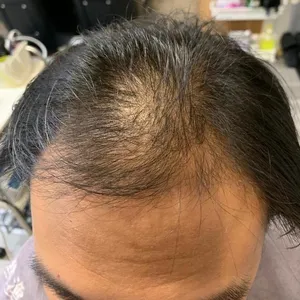
Male, early androgenetic alopecia. Pre-LLLT treatment.

Same client, approximately 3 months after treatment commencement. Individual results vary.
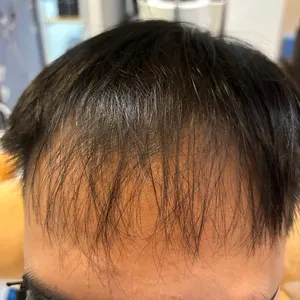
Same client. Post-LLLT treatment with visible improvement.