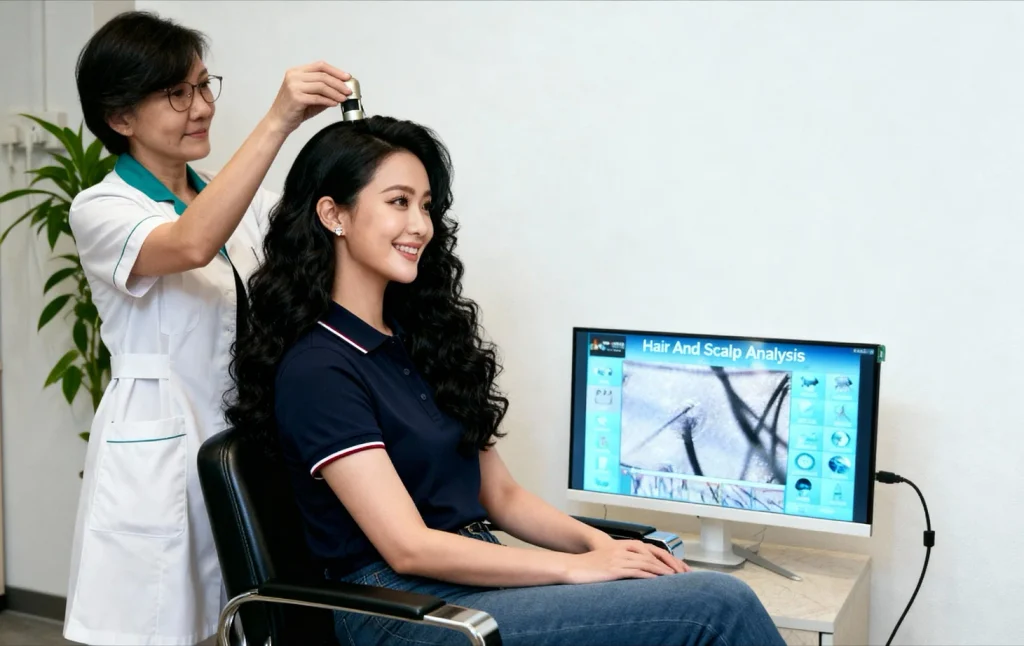
AUTHORITATIVE GUIDE
Hair Loss Singapore
Understanding hair loss | Can hair growth back? | Hair loss causes
Treatment options | Expected results | Why treatments sometimes fail
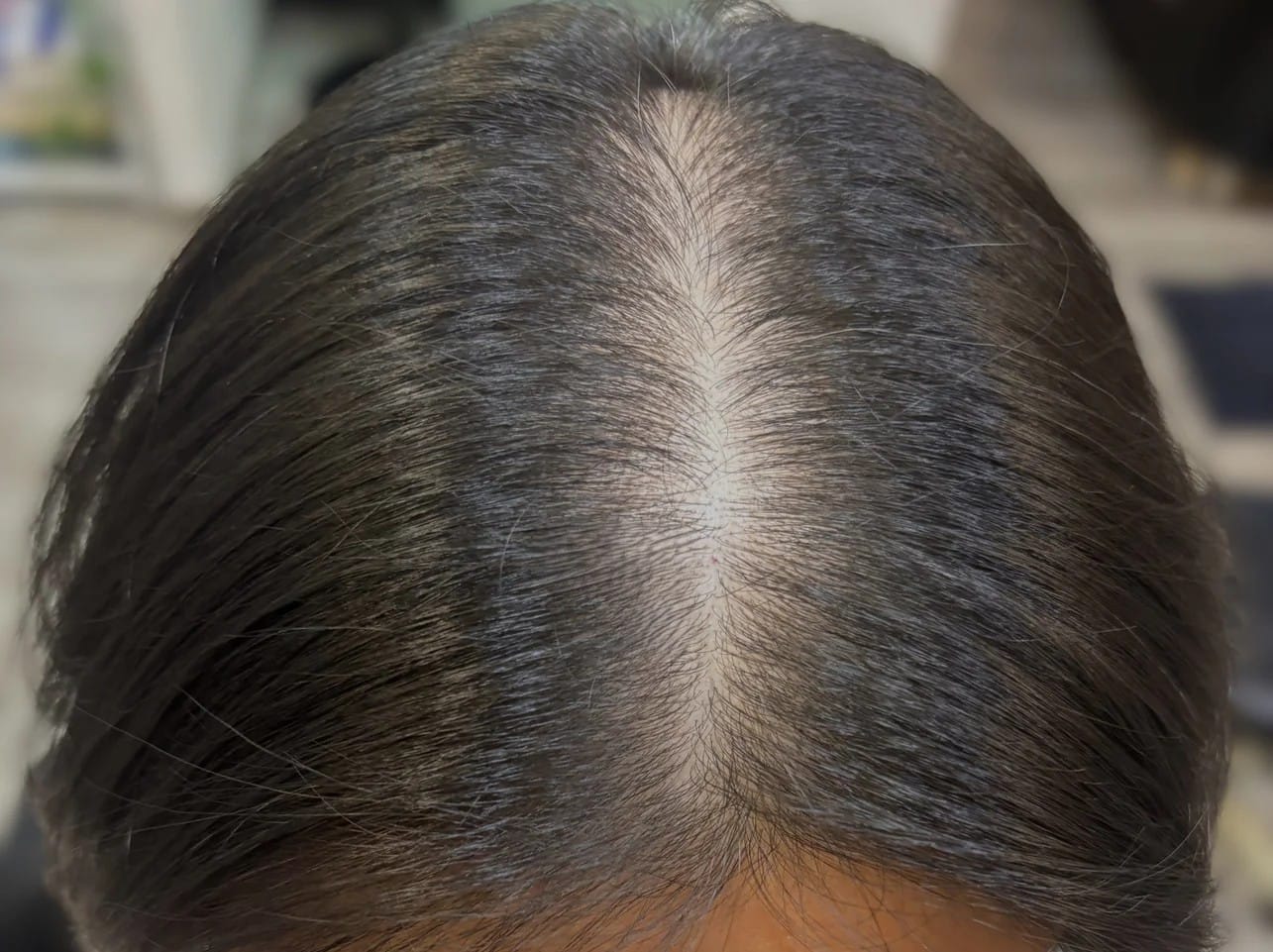
- A sudden increase in hair fall, such as more hair on the pillow, in the shower or after brushing
- Visible thinning at the parting, crown, hairline or temples
- A widening part line or reduced ponytail volume
- Hair becoming noticeably finer, weaker or flatter
- Patchy hair loss or new areas of visible scalp
- Persistent dandruff, itchiness, oiliness, redness or scalp sensitivity
Quick self-check
- Was the shedding linked to a recent trigger such as illness, childbirth or major stress? If yes, a time-limited process may be more likely.
- Is the scalp becoming visibly more exposed or is your part widening? If yes, arrange an earlier review.
- Is there persistent scalp inflammation, flaking or heavy buildup? If yes, improving the scalp environment is usually the first logical step.
Follicle states — a practical guide
- Active follicles: still producing visible terminal hair and typically the most responsive to treatment.
- Weakened or miniaturised follicles: producing finer, shorter hairs; many retain recovery potential if treatment starts early and is followed consistently.
- Long-term inactive follicles: show little visible activity; non-surgical approaches have reduced potential and medical or surgical routes may need to be considered elsewhere as realistic alternatives.
What to expect — realistic timelines
Reduced irritation, less day-to-day hair fall and improved scalp condition are useful early signals that a plan is having an effect.
New hairs are often finer and shorter at first before gradually thickening. Final outcomes depend on the underlying cause, follicle responsiveness and ongoing adherence.
Typical pattern and timing
- Shedding is often most noticeable several weeks to months after delivery, not immediately.
- The increase can feel dramatic, but many cases resolve gradually.
- Some people recover within months, while others need longer support if additional triggers are present.
Common contributing factors
- Hormonal changes after delivery.
- Low iron, reduced protein intake or depleted nutrient reserves.
- Sleep disruption, physical recovery and increased stress.
- Declining oestrogen levels affecting the hair-growth cycle.
- Relative androgen influence in susceptible follicles.
- Sleep disturbance, stress and shifting nutritional needs.
- Co-existing scalp issues such as irritation, flaking or buildup.
Practical point: gradual hormonal thinning is often easier to miss in the early stages, which is why clearer baseline imaging and realistic timeline planning can be useful.
Practical treatment considerations (non-medical)
- Consider hormonal and nutritional contributors where clinically appropriate and refer for medical review where needed.
- Prioritise scalp health if there is buildup, inflammation or sensitivity.
- Match the treatment route to the pattern and stage of thinning rather than using one-size-fits-all solutions.
- Use realistic review periods and objective tracking, such as photos and imaging, before changing course.
Common causes in this group
- Early hereditary pattern thinning, often around the temples or crown
- Stress-related shedding after illness, travel or routine disruption
- Nutritional gaps such as low iron, low protein intake or irregular meals
- Styling and chemical damage from frequent heat, bleaching or tight hairstyles
- Scalp imbalance such as buildup, dandruff or sensitivity
Signs to watch for
- Increased hair in the drain, on your pillow or on your brush
- New thinning at the temples or crown, or a widening part
- Persistent scalp irritation, flaking or oiliness
Practical first steps for busy professionals
- Reduce heat and chemical styling where possible; pause aggressive colour or bleaching temporarily
- Use gentler brushes and avoid tight hairstyles
- Prioritise sleep with small, realistic steps such as a more consistent bedtime window
- Improve basic nutrition with lean protein, iron-rich foods and more regular meals
Simple next step: if you are trying to balance a demanding routine with new hair changes, it helps to get a clearer picture before jumping between products or inconsistent routines.
What a focused young-adult check provides

What treatment options are available in Singapore?
| TREATMENT OPTION | CATEGORY / STAGE | HOW IT WORKS | COMMONLY CONSIDERED FOR | TREATMENT ROUTE | Available AT VESURE? |
|---|---|---|---|---|---|
| Scalp therapy / targeted scalp treatments | Scalp therapy | Cleanses, decongests and improves the scalp environment | Buildup-related shedding, itchiness, oiliness, dandruff and scalp congestion | Scalp centre / hair therapy clinic | Yes |
| Low-Level Laser Therapy (LLLT) | Hair-growth support | Uses red light energy to stimulate follicle activity and improve scalp circulation | Early to moderate hair loss; post-hair transplant maintenance | Scalp centre / aesthetic clinic | Yes |
| Polypeptide / peptide treatments | Targeted follicle support | Supports the scalp environment, reduces inflammation, and strengthens hair follicles | Early hair thinning, sensitive scalp, irritation-linked hair concerns | Hair therapy clinic / scalp centre | Yes |
| Exosome / regenerative systems | Advanced support | Uses regenerative signalling support to target the scalp microenvironment | Moderate to more established thinning in selected cases | Advanced scalp centre / aesthetic clinic | Yes |
| Herbal hair loss therapy | Herbal follicle and scalp support | Uses bio-active herbal essences and professional scalp care to support follicle activity and strengthen weaker strands | Early to moderate thinning, oily or inflamed scalp and density-maintenance support | Scalp centre / TCM-influenced clinic | Yes |
| Regenera Activa | Medical procedure | Uses micrografting from your own scalp to stimulate hair growth | Androgenetic alopecia | Doctor / dermatologist / medical aesthetic clinic | No |
| Medical topicals and oral prescriptions | Medical support | Clinician-supervised routes intended to support the hair-growth cycle | Medically suitable pattern thinning cases | Doctor / dermatologist / medical clinic | No |
| Hair Transplant (FUT / FUE) | Surgical restoration | Moves donor follicles into balding areas | Advanced and more stable pattern hair loss | Hair transplant surgeon / medical clinic | No |
| Lifestyle and scalp maintenance | Foundational support | Improves nutrition, stress management, hair-care habits and scalp hygiene | Almost all hair-loss journeys as supportive care | Home care with professional guidance | Yes |
Practical point: where buildup, irritation or oiliness are part of the picture, addressing the scalp environment first can make later support more coherent and easier to judge.
| TREATMENT OPTION | CATEGORY / STAGE | DESCRIPTION | BEST FOR | PRICE |
|---|---|---|---|---|
| Targeted scalp treatments | Scalp therapy | Deep cleansing and conditioning support to reduce buildup and inflammation | Oiliness, dandruff, scalp congestion and early shedding linked to scalp condition | S$155 / S$195 |
| Low-level laser therapy (LLLT) | Hair-growth support | Light therapy for early-to-moderate thinning and maintenance | Early thinning, weakened hair and maintenance support | S$175 / S$205 |
| Polypeptide regrowth system | Targeted follicle support | Peptide-based support to strengthen the follicle environment and calm sensitive scalps | Early thinning, irritation-linked concerns and sensitive scalp | S$217 / S$247 |
| Exosome regrowth system | Advanced support | Regenerative support considered for selected cases of more established thinning | More established thinning where a stronger route may be appropriate | S$425 |
| Intensive herbal hair loss treatment | Herbal follicle and scalp support | Herbal treatment designed to support follicle reactivation, rebalance scalp pH and microbiome conditions | Early to moderate thinning, oily or irritated scalp | S$197 / S$227 |
| Lifestyle & maintenance guidance | Foundational support | Tailored home-care, nutrition guidance and practical consistency planning | All clients as part of longer-term support | Included within guidance |
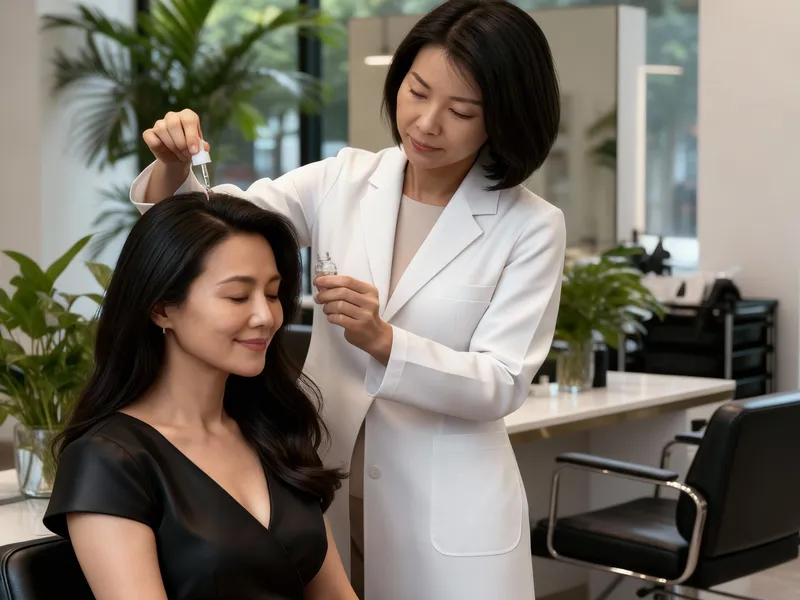
How progress is measured
- Fixed-angle photos taken consistently from the same views.
- Multi-site scalp imaging to track follicle visibility and miniaturisation.
- Defined review checkpoints, often around 4 to 6 months, before major plan changes.
- Objective triggers to adjust the plan, such as persistent shedding, new thinning, worsening scalp inflammation or a lack of visible follicle response.
Practical reminder: avoid switching too early between multiple products or routes unless there is a clear reason to do so.
Practical ways to reduce the risk of failure
- Make sure the treatment choice matches the dominant cause
- Allow enough time to assess progress properly
- Address scalp health and inflammation early
- Keep lifestyle habits and home care aligned with the treatment plan
- Reassess when progress stalls instead of repeating the same approach indefinitely
A simple self-audit before switching treatments
- Have you had a clear scalp assessment?
- Have you followed the agreed protocol consistently for the review period?
- Is the scalp free from ongoing inflammation or heavy buildup?
- Have lifestyle and medication triggers been considered?
If the answer to any of the above is no, a focused reassessment is usually the best next step.
Hair care is often less about chasing many treatments and more about choosing the right route for your condition, then following it consistently to achieve the desirable outcome.
- Regular scalp cleansing and decongestion to reduce buildup and inflammation
- Gentle, compatible home-care products that do not strip or irritate the scalp
- Nutritional and lifestyle consistency, including adequate protein, sleep and stress management
- Periodic reviews and imaging to detect early changes and refine the plan
- Realistic maintenance plans, since successful outcomes depend on ongoing lower-intensity support rather than one-off intervention
- Book a focused scalp assessment if you have persistent shedding, visible thinning or ongoing scalp symptoms.
- Use baseline photos and a simple checklist to monitor your progress before changing or adding treatments.
- If you suspect a medical driver, such as sudden or severe shedding, wider health symptoms, or possible hormonal or thyroid concerns, coordinate a medical review alongside scalp-focused care.